

MesAI
Case Study


Go to home
Unifying Manufacturing Operations and AI into a Single Industrial Platform

product type
Industrial SaaS Platform
Manufacturing Operations
AI-powered Monitoring
My role
Product Designer
Product Designer
UX/UI Lead
status
Production module designed
Maintenance module designed
Pricing Plan designed
collaboration
Close collaboration with founders, domain experts and development team to transform functional requirements into scalable product experiences.
THE CHALLENGE
MesIA aimed to bring together the most valuable capabilities of traditional manufacturing systems into a single platform.
The vision combined concepts usually spread across multiple products:


Production management

Maintenance operations


Operational dashboards


Predictive intelligence


Conversational AI assistance
Asset monitoring
The challenge was not defining the business logic itself.
A detailed functional specification already existed.
My responsibility was translating that technical specification into workflows, interfaces and interaction patterns that could be understood and used by both managers and technicians.
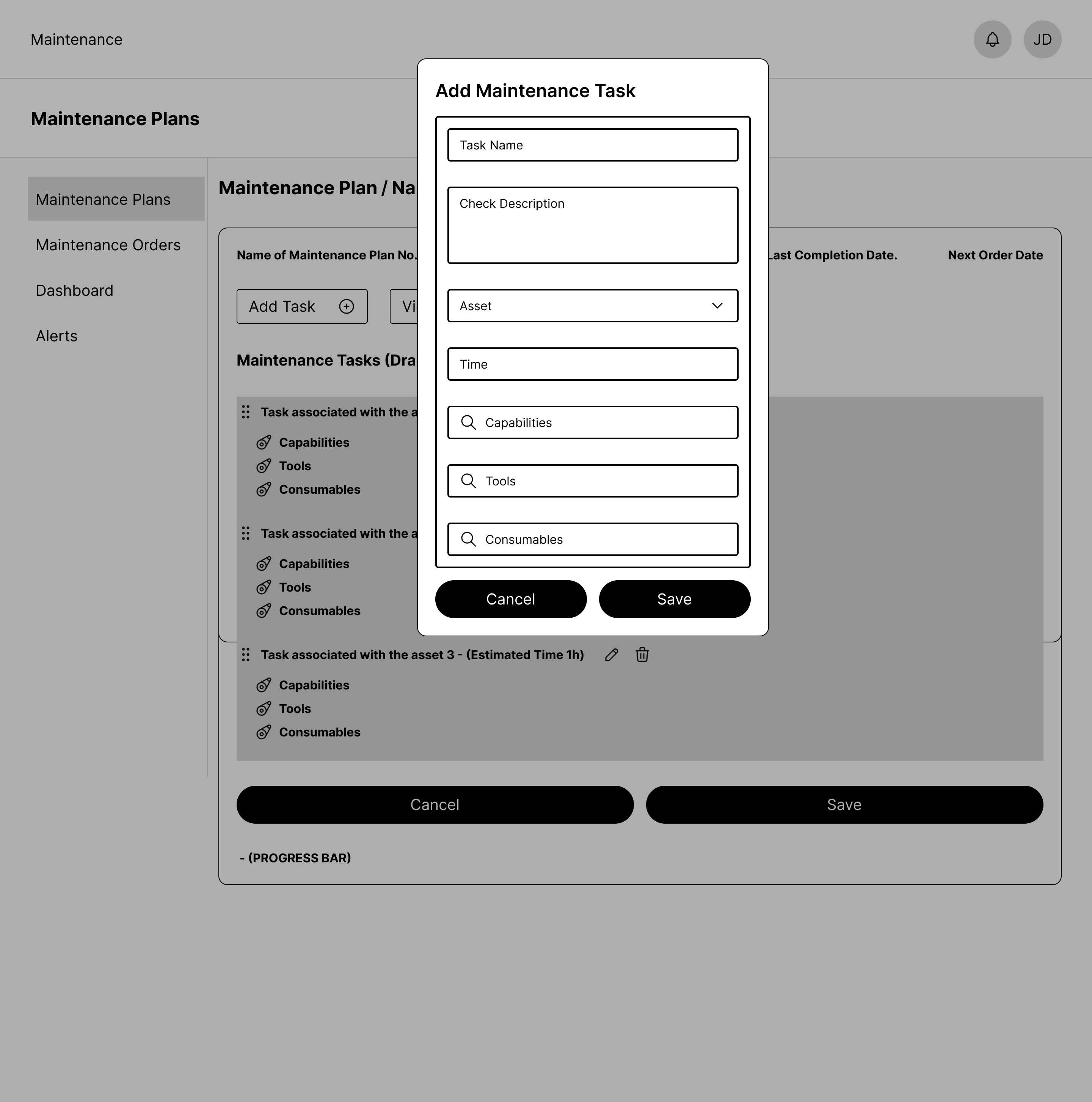
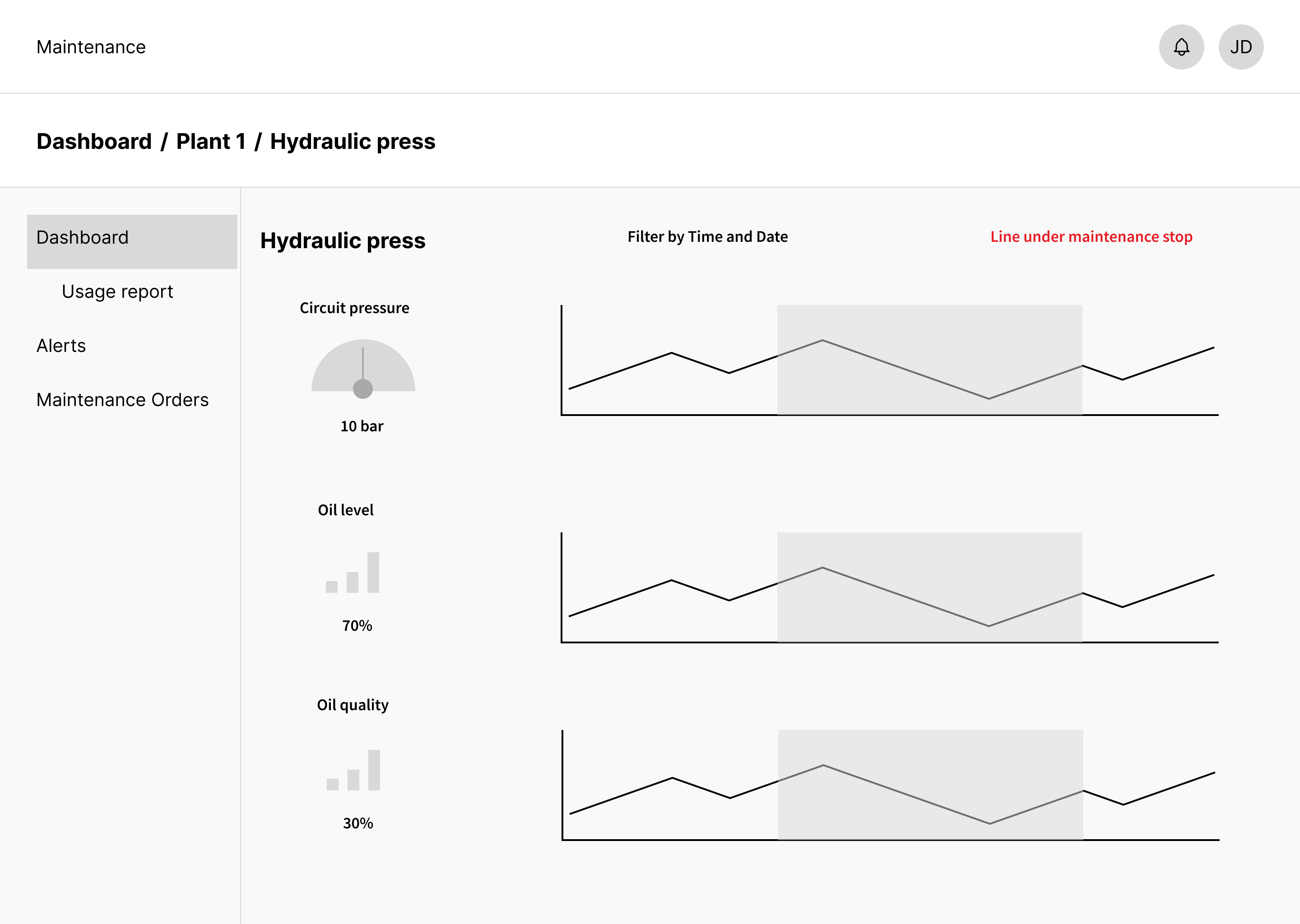
Display of different views, die configuration and result display after die roll
INITIAL COMPLEXITY
The platform needed to support:


Products operations


Plants
Production lines
Industrial assets
Sensors
Production orders
Maintenance Operations
Maintenance plans
Work orders
Preventive maintenance
Corrective maintenance
Predictive maintenance
Artificial Intelligence
AI agents monitoring production
Anomaly detection
Predictive recommendations
Conversational Copilot


Multiple User Roles
Production Directors
Maintenance Directors
Production Technicians
Maintenance Technicians
Each role required different levels of information, permissions and decision-making capabilities.
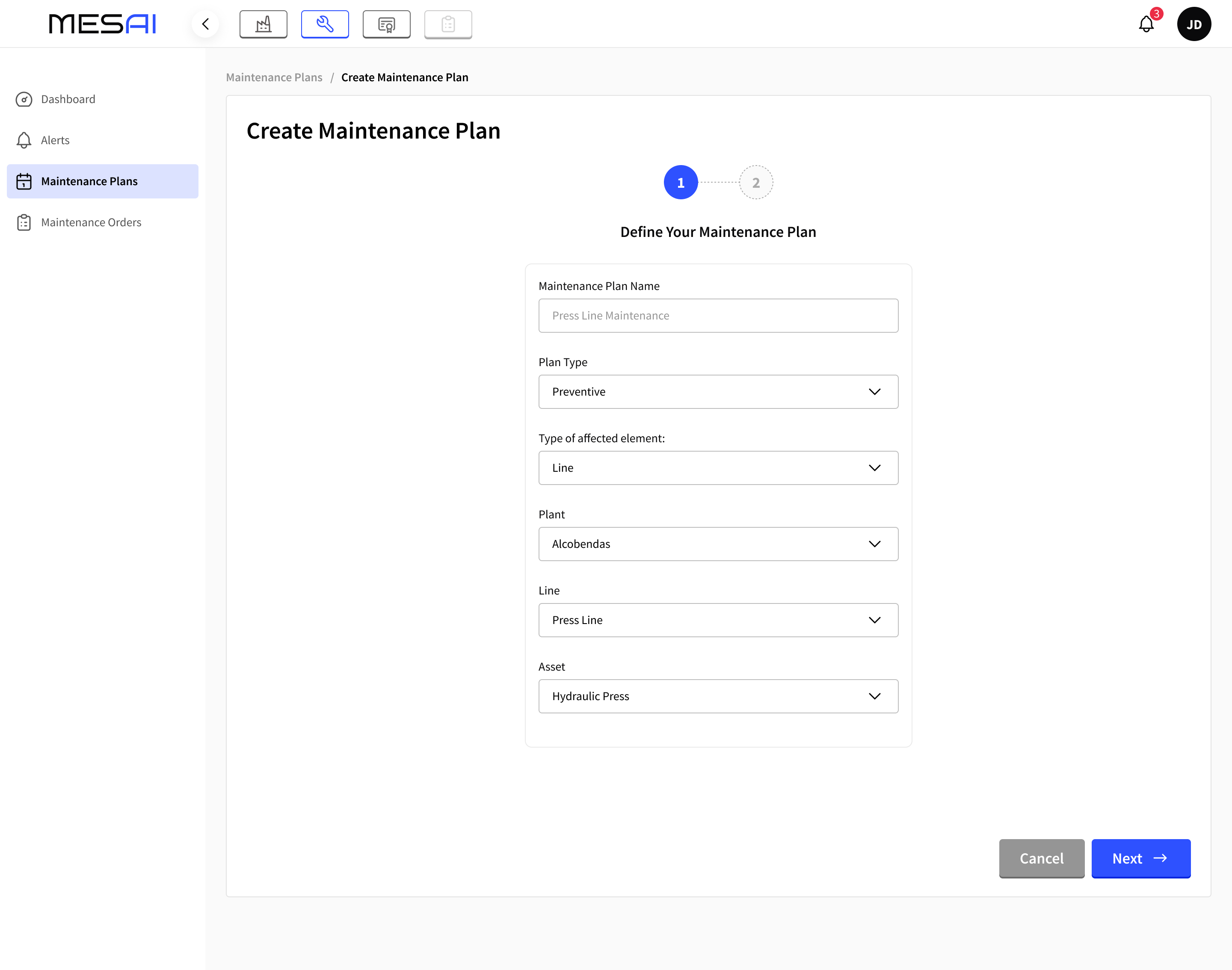
Initial design mockups before finalizing the branding. Onboarding flow
MY ROLE
I joined the project after the initial functional definition phase.
The business requirements, industrial processes and platform capabilities had already been documented.
My role focused on transforming those requirements into a usable and scalable product experience.
Responsibilities included:


Information architecture


Workflow
design


Wireframing


UI design


Dashboard
design


Design system creation
Production module UX/UI
Maintenance module UX/UI

AI Copilot
experience


Responsive
adaptation
The project started with low-fidelity wireframes used to validate workflows and interaction patterns before moving into polished UI design.
Later in the process, the visual identity evolved and parts of the interface were adapted to align with the final branding direction.
Turning Point
The project became significantly clearer once we stopped thinking about it as a collection of industrial screens.
Instead, we reframed it as an operational decision platform.
Users didn't need more data.
They needed help understanding:
- What is happening
- What requires attention
- What action should be taken next
This principle guided the design of dashboards, alert systems and AI-assisted workflows.
PROCESS
DIGNO™ methodology
Diagnosis
Understanding the operational ecosystem and identifying how users interacted with industrial processes.
•
Functional specification review
•
User role analysis
•
Operational workflow mapping
•
Information architecture definition
•
KPI prioritization
Ideation
Exploring how complex manufacturing processes could be translated into understandable interfaces.
•
Production workflows
•
Maintenance workflows
•
Dashboard concepts
•
Alert systems
•
Copilot interaction patterns
Generation
Building the first complete product experience.
•
Wireframes
•
User flows
•
Production module
•
Maintenance module
•
Dashboard ecosystem
•
Design system foundation
Normalization
Creating consistency across multiple modules and user types.
•
Reusable components
•
Shared interaction patterns
•
Operational states
•
Alert framework
•
Dashboard standards
Optimization
Continuous refinement through stakeholder reviews and implementation feedback.
•
Workflow simplification
•
Information hierarchy improvements
•
Dashboard readability
•
Component evolution
•
Pricing plan adjustments
SOLUTION
Production Module
The production module became the operational center of the platform.
Users could manage:


Plants
Multiple facilities and locations


Product lines
Lines, cells and work centers


Assets
Machines and equipment


Sensors
Real-time data collection


Production orders
Execution and tracking
The main challenge was presenting industrial structures and operational status without overwhelming users with technical complexity.
Key UX Focus


Production order lifecycle
Clear visibility of order status from creation to completion


Real time visibility
Monitoring what’s happening now to support quick decisions


Operational status awareness
Surface critical KPIs and system health at a glance


Shift handover continuity
Ensure information flows seamlessly between shifts


Alert management
Highlight what requires attention and why
Maintenance Module
The maintenance module connected operational monitoring with maintenance execution.
It supported:

Maintenance plans
Work orders
Maintenance tasks
Resource tracking
Predictive recommendations
The experience was designed around actionability and traceability rather than administrative complexity.
Key UX Focus
Work order execution
Task visibility
Priority management
Resource documentation
Maintenance planning
AI Copilot
One of the most forward-looking aspects of the platform was the integration of a conversational AI assistant.
Rather than acting as a standalone chatbot, the Copilot was conceived as an operational assistant capable of helping users interpret production and maintenance information.
Key UX Focus
Natural language interaction
Operational insights
Alert interpretation
Decision support
Reduced navigation complexity
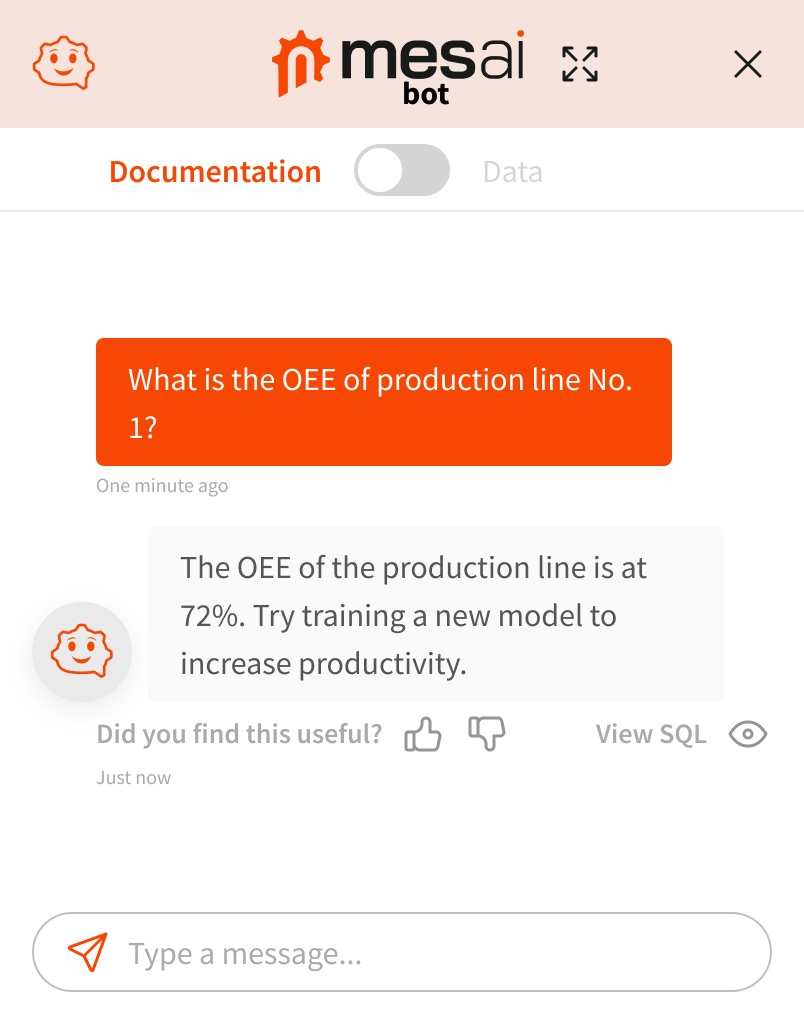
Floating Chat View
CONSTRAINS
I led the end-to-end redesign as the UX/UI Lead, working directly with stakeholders and the development team. My responsibilities spanned from strategic UX auditing to detailed UI execution.
1
Complex Industrial Domain
The platform needed to represent manufacturing environments accurately while remaining understandable for non-specialist users.
2
Multiple Operational Roles
Different user groups required different levels of information and control.
3
High Information Density
Dashboards needed to surface critical information without overwhelming users.
4
Evolving Visual Identity
Part of the visual design had to be adapted after branding decisions were introduced.
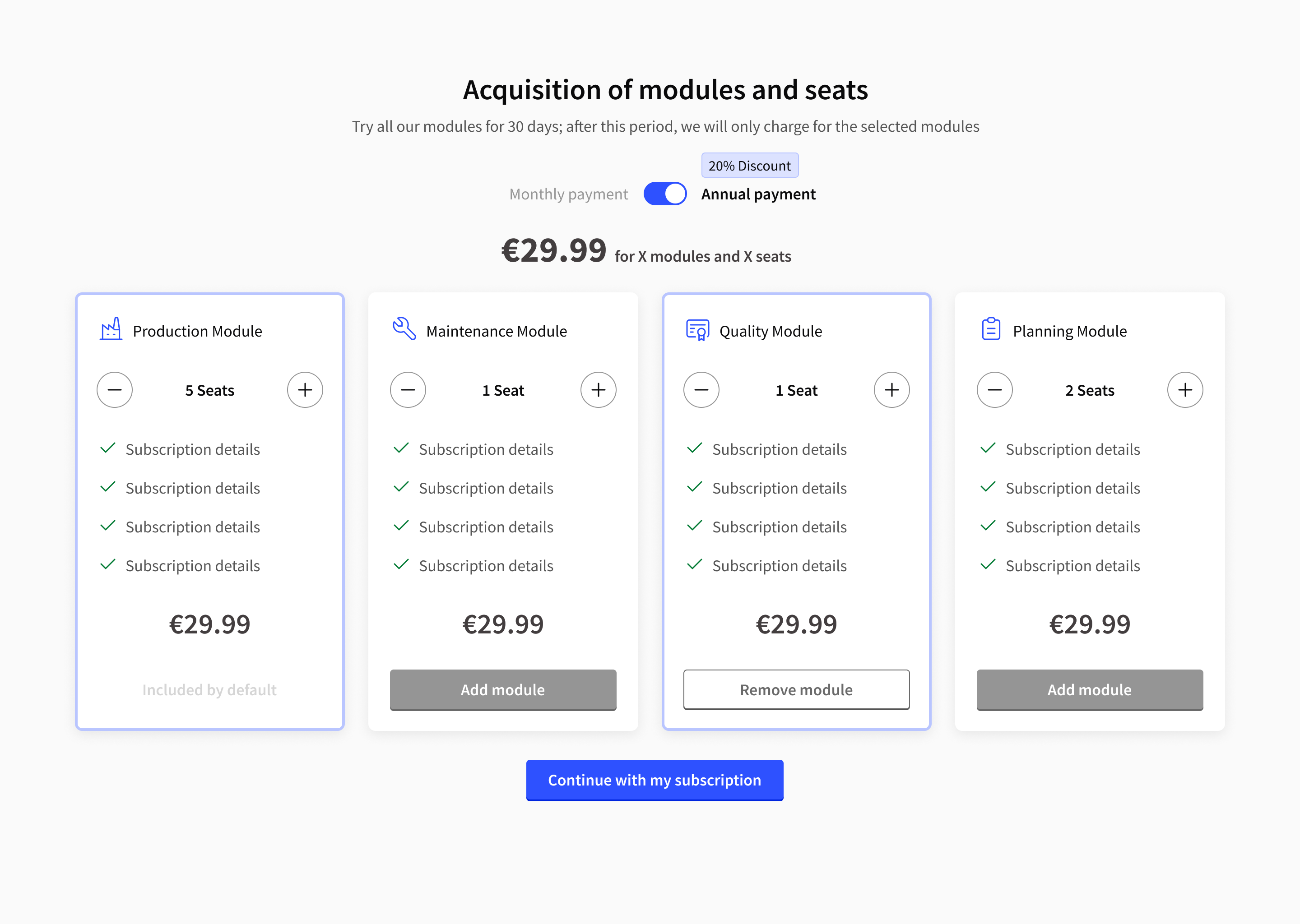
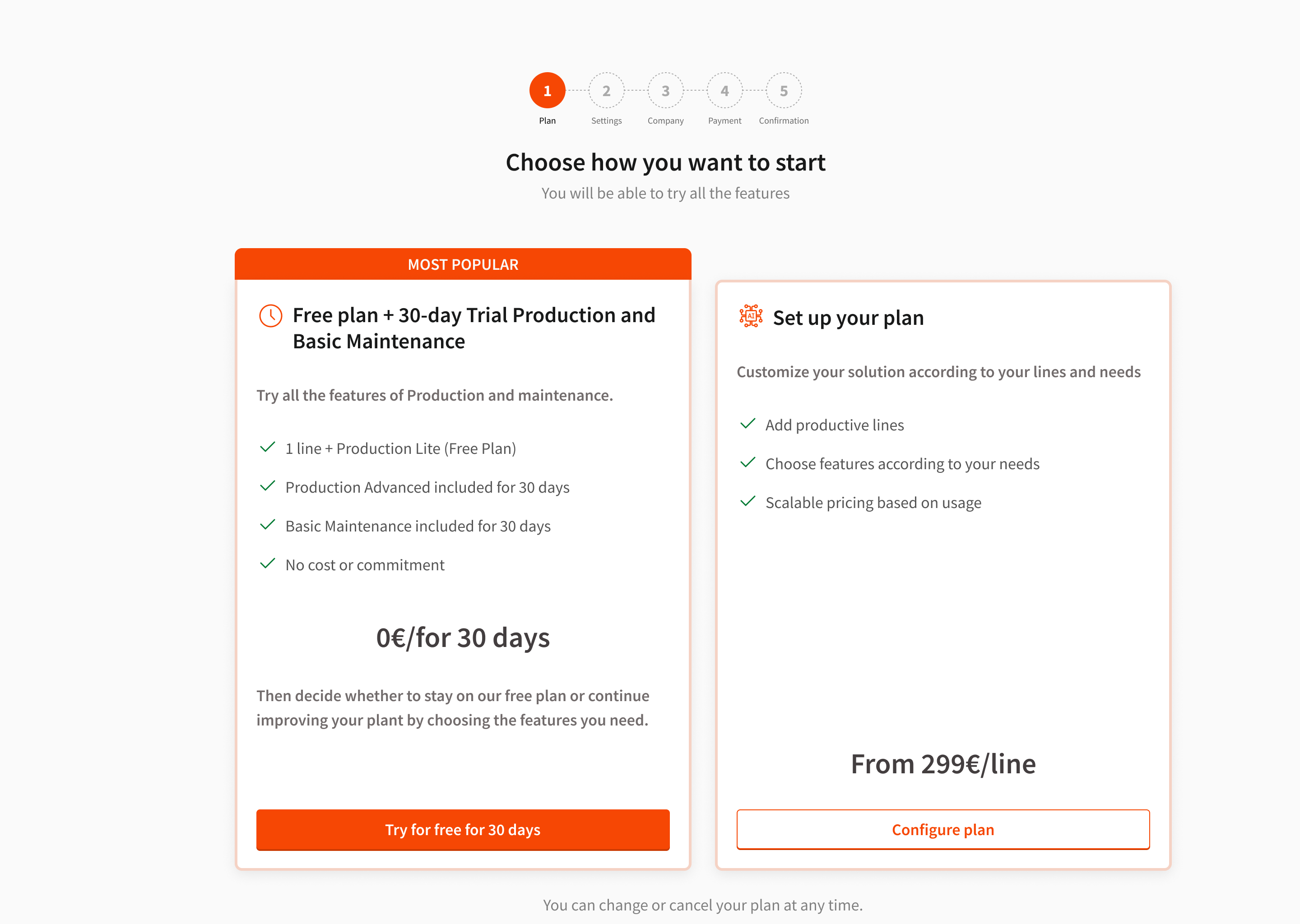
Top: Original pricing plan. - Bottom: New version of the plan tailored to users' needs
OUTCOME
The redesign transformed MesAI from a complex industrial requirements into an operational platform that empowers teams to monitor, decide and act with confidence.
Platform launched successfully
MesAI went live with a robust foundation across production, maintenance and AI capabilities.
LIVE PLATFORM
Operational complexity simplified
Complex industrial hierarchies and workflows were translated into clear, intuitive experiences.
SIMPLIFIED OPERATIONS
User adoption accelerated
Role-based design and focused workflows improved usability for both managers and technicians.
HIGUEL ADOPTION
Decision-making improved
Dashboards, alerts and AI insights help users identify what matters and act faster.
BETTER OPERATIONAL VISIBILITY
AI Copilot integrated into daily operations
AI assistance became a practical tool for understanding, interpreting and acting on operational data.
AI-READY EXPERIENCE
Scalable design foundation
A modular architecture and design system support continuous growth and future industrial domains.
READY TO SCALE
WHAT THIS PROJECT SHOWS
This case study showcases my approach to product design: systematic, research-driven, focused on measurable outcomes, and adaptable to evolving product needs.
AI Product Integration
Designing practical AI experiences that support operational decision-making and reduce complexity.
Design Systems
Building scalable UI foundations capable of supporting product growth across multiple modules.
Pricing & Monetization Design
Contributed to the transition from a traditional license-based model to a modular freemium approach, aligning product structure, feature access and upgrade paths with business goals.
Marketplace expertise
Experience designing products with multiple modules, user roles and operational dependencies.
Complex Workflow Design
Ability to transform technical requirements into intuitive user experiences.
Information Architecture
Structuring large systems without sacrificing clarity.
Industrial UX
Experience working with manufacturing processes, operational monitoring and maintenance workflows.
AI Product Integration
Designing practical AI experiences that support operational decision-making and reduce complexity.
Design Systems
Building scalable UI foundations capable of supporting product growth across multiple modules.
Pricing & Monetization Design
Contributed to the transition from a traditional license-based model to a modular freemium approach, aligning product structure, feature access and upgrade paths with business goals.
Cross-Functional Collaboration
Working alongside stakeholders, domain experts and engineers to translate business requirements into scalable product experiences.
Interested in working together?
Schedule an appointment

Method
About
Services
Contact me
Book an appointment
MesAI

Case Study

Go to home
Unifying Manufacturing Operations and AI into a Single Industrial Platform
product type
Industrial SaaS Platform
Manufacturing Operations
AI-powered Monitoring
My role
Product Designer
UX/UI Designer
Design System Designer
status
Production module designed
Maintenance module designed
Pricing Plan designed
collaboration
Close collaboration with founders, domain experts and development team to transform functional requirements into scalable product experiences.
THE CHALLENGE
MesIA aimed to bring together the most valuable capabilities of traditional manufacturing systems into a single platform.
The vision combined concepts usually spread across multiple products:
Production management
Maintenance operations


Operational dashboards
Predictive intelligence


Conversational AI assistance
Asset monitoring
The challenge was not defining the business logic itself.
A detailed functional specification already existed.
My responsibility was translating that technical specification into workflows, interfaces and interaction patterns that could be understood and used by both managers and technicians.
Starting phase: Translating the documentation requirements into wireframes for adaptation and approval
INITIAL COMPLEXITY
The platform needed to support:
Products operations


Plants
Production lines
Industrial assets
Sensors
Production orders

Maintenance Operations
Maintenance plans
Work orders
Preventive maintenance
Corrective maintenance
Predictive maintenance


Artificial Intelligence
AI agents monitoring production
Anomaly detection
Predictive recommendations
Conversational Copilot
Multiple User Roles
Production Directors
Maintenance Directors
Production Technicians
Maintenance Technicians
Each role required different levels of information, permissions and decision-making capabilities.
Initial design mockups before finalizing the branding. Onboarding flow
MY ROLE
I joined the project after the initial functional definition phase.
The business requirements, industrial processes and platform capabilities had already been documented.
My role focused on transforming those requirements into a usable and scalable product experience.
Responsibilities included:


Information architecture


Workflow design


Wireframing


UI design


Dashboard design


Design system creation
Production module UX/UI
Maintenance module UX/UI

AI Copilot experience


Responsive adaptation
The project started with low-fidelity wireframes used to validate workflows and interaction patterns before moving into polished UI design.
Later in the process, the visual identity evolved and parts of the interface were adapted to align with the final branding direction.
Turning Point
The project became significantly clearer once we stopped thinking about it as a collection of industrial screens.
Instead, we reframed it as an operational decision platform.
Users didn't need more data.
They needed help understanding:
- What is happening
- What requires attention
- What action should be taken next
This principle guided the design of dashboards, alert systems and AI-assisted workflows.
PROCESS
DIGNO™ methodology
Diagnosis
Understanding the operational ecosystem and identifying how users interacted with industrial processes.
•
Functional specification review
•
User role analysis
•
Operational workflow mapping
•
Information architecture definition
•
KPI prioritization
Ideation
Exploring how complex manufacturing processes could be translated into understandable interfaces.
•
Production workflows
•
Maintenance workflows
•
Dashboard concepts
•
Alert systems
•
Copilot interaction patterns
Generation
Building the first complete product experience.
•
Wireframes
•
User flows
•
Production module
•
Maintenance module
•
Dashboard ecosystem
•
Design system foundation
Normalization
Creating consistency across multiple modules and user types.
•
Reusable components
•
Shared interaction patterns
•
Operational states
•
Alert framework
•
Dashboard standards
Optimization
Continuous refinement through stakeholder reviews and implementation feedback.
•
Workflow simplification
•
Information hierarchy improvements
•
Dashboard readability
•
Component evolution
•
Pricing plan adjustments
SOLUTION
Production Module
The production module became the operational center of the platform.
Users could manage:


Plants
Multiple facilities and locations


Product lines
Lines, cells and work centers


Assets
Machines and equipment


Sensors
Real-time data collection


Production orders
Execution and tracking
The main challenge was presenting industrial structures and operational status without overwhelming users with technical complexity.
Key UX Focus


Production order lifecycle
Clear visibility of order status from creation to completion


Real time visibility
Monitoring what’s happening now to support quick decisions


Operational status awareness
Surface critical KPIs and system health at a glance


Shift handover continuity
Ensure information flows seamlessly between shifts


Alert management
Highlight what requires attention and why
Maintenance Module
The maintenance module connected operational monitoring with maintenance execution.
It supported:
Maintenance plans
Work orders
Maintenance tasks
Resource tracking
Predictive recommendations
The experience was designed around actionability and traceability rather than administrative complexity.
Key UX Focus
Work order execution
Task visibility
Priority management
Resource documentation
Maintenance planning
AI Copilot
One of the most forward-looking aspects of the platform was the integration of a conversational AI assistant.
Rather than acting as a standalone chatbot, the Copilot was conceived as an operational assistant capable of helping users interpret production and maintenance information.
Key UX Focus
Natural language interaction
Operational insights
Alert interpretation
Decision support
Reduced navigation complexity
Floating Chat View
CONSTRAINS
I led the end-to-end redesign as the UX/UI Lead, working directly with stakeholders and the development team. My responsibilities spanned from strategic UX auditing to detailed UI execution.
1
Complex Industrial Domain
The platform needed to represent manufacturing environments accurately while remaining understandable for non-specialist users.
2
Multiple Operational Roles
Different user groups required different levels of information and control.
3
High Information Density
Dashboards needed to surface critical information without overwhelming users.
4
Evolving Visual Identity
Part of the visual design had to be adapted after branding decisions were introduced.
Left: Original pricing plan. - Right: New version of the plan tailored to users' needs
OUTCOME
The redesign transformed MesAI from a complex industrial requirements into an operational platform that empowers teams to monitor, decide and act with confidence.
Platform launched successfully
MesAI went live with a robust foundation across production, maintenance and AI capabilities.
LIVE PLATFORM
Operational complexity simplified
Complex industrial hierarchies and workflows were translated into clear, intuitive experiences.
SIMPLIFIED OPERATIONS
User adoption accelerated
Role-based design and focused workflows improved usability for both managers and technicians.
HIGUEL ADOPTION
Decision-making improved
Dashboards, alerts and AI insights help users identify what matters and act faster.
BETTER OPERATIONAL VISIBILITY
AI Copilot integrated into daily operations
AI assistance became a practical tool for understanding, interpreting and acting on operational data.
AI-READY EXPERIENCE
Scalable design foundation
A modular architecture and design system support continuous growth and future industrial domains.
READY TO SCALE
WHAT THIS PROJECT SHOWS
This case study showcases my approach to product design: systematic, research-driven, focused on measurable outcomes, and adaptable to evolving product needs.
Enterprise SaaS Design
Experience designing products with multiple modules, user roles and operational dependencies.
Complex Workflow Design
Ability to transform technical requirements into intuitive user experiences.
Information Architecture
Structuring large systems without sacrificing clarity.
Industrial UX
Experience working with manufacturing processes, operational monitoring and maintenance workflows.
AI Product Integration
Designing practical AI experiences that support operational decision-making and reduce complexity.
Design Systems
Building scalable UI foundations capable of supporting product growth across multiple modules.
Pricing & Monetization Design
Contributed to the transition from a traditional license-based model to a modular freemium approach, aligning product structure, feature access and upgrade paths with business goals.
Cross-Functional Collaboration
Working alongside stakeholders, domain experts and engineers to translate business requirements into scalable product experiences.
Interested in working together?
Schedule an appointment